How-to · about 240 min
How to Dry Filament at Home
Remove absorbed moisture from a spool so it prints cleanly again, without stringing, popping or weak, rough layers.
- 01
Confirm the filament is wet
Common signs are popping or hissing at the nozzle, steam near the hot end, heavy stringing, and a rough or bubbly surface. Nylon, TPU, PETG and PVA soak up water fastest, but PLA can also get wet after weeks in humid air. If prints were fine before and nothing else changed, moisture is a likely cause.
- 02
Look up the safe drying temperature
Check the filament maker's label or website for a drying temperature and time. Typical ranges are 40 to 50 C for PLA, 55 to 65 C for PETG, 45 to 55 C for TPU, 60 to 80 C for ABS and ASA, and 70 to 90 C for nylon. Stay below the glass transition point of the plastic, or the strands will soften and fuse together on the spool.
- 03
Check the spool material
Some spools are cardboard or a plastic that warps at higher temperatures. If you are drying above about 60 C, make sure the spool can take the heat or move the filament to a heat-rated spool. Tape down the loose end so it cannot unwind.
- 04
Set up the dryer or oven
Place the dryer or dehydrator on a stable, non-flammable surface away from curtains and paper. If you use a home oven, preheat it and confirm the real temperature with an oven thermometer, because many ovens overshoot at low settings by 10 C or more. Never use a microwave, and do not leave an oven running unattended.
- 05
Load the spool and start drying
Put the spool in so warm air can reach all sides, with a little gap to the heating element. For a dehydrator you may need to remove trays or add spacers. Leave a small vent open so moist air can escape.
- 06
Dry for the full time
Most filaments need 4 to 6 hours, while nylon and very wet spools may need 8 to 12 hours. Check the temperature once early on to make sure it is stable. Ventilate the room if you smell plastic, and lower the temperature if the outer layer looks soft or shiny.
- 07
Remove the spool with care
Turn off and unplug the dryer or switch off the oven first. The spool and the inside of the unit will be hot, so wear heat-resistant gloves. Let the spool cool for a few minutes on a heat-safe surface.
- 08
Store it dry right away
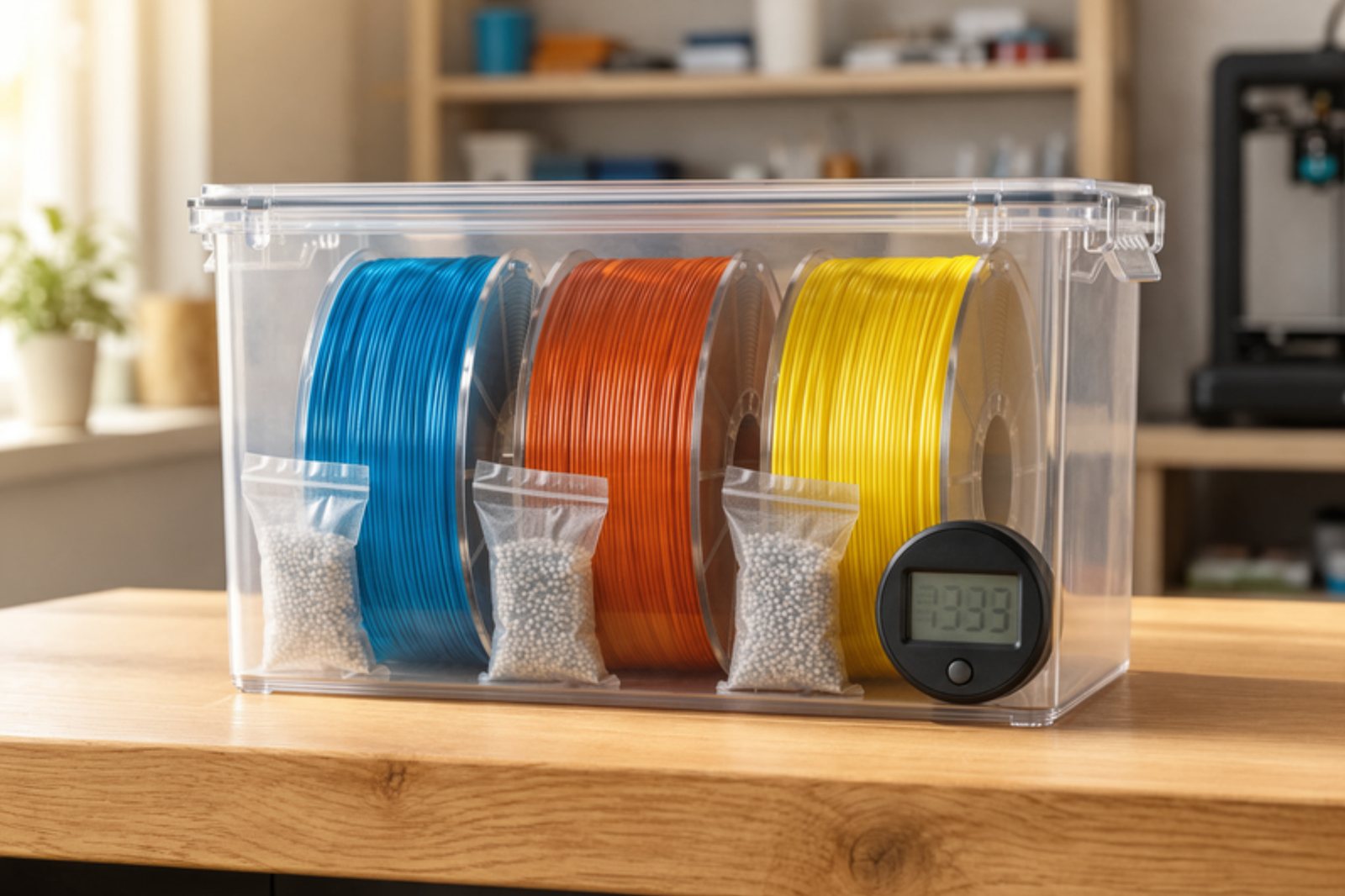
Seal the spool in an airtight container or bag with fresh or recharged desiccant while it is still slightly warm. This stops it from soaking moisture back up from the room air. Add a humidity card if you want to see when the desiccant needs replacing.
- 09
Test print
Print a small test such as a calibration cube or stringing test. The popping and steam should be gone and the surface should look smooth. If problems remain, dry for a few more hours or check your print settings.