Guides / Money
What a 3D print really costs (it is less than you think)
Grams times price per kilo gets you most of the way. Here is the full sum, a worked example, the costs people forget, and how to price a print for someone else.
Ask ten people what a print costs and you get ten guesses. The honest answer is a small sum you can do in your head, plus a couple of extras that are easy to forget. Once you know your real number, saying yes to a favour, or quoting a customer, stops being awkward.
The one sum that matters
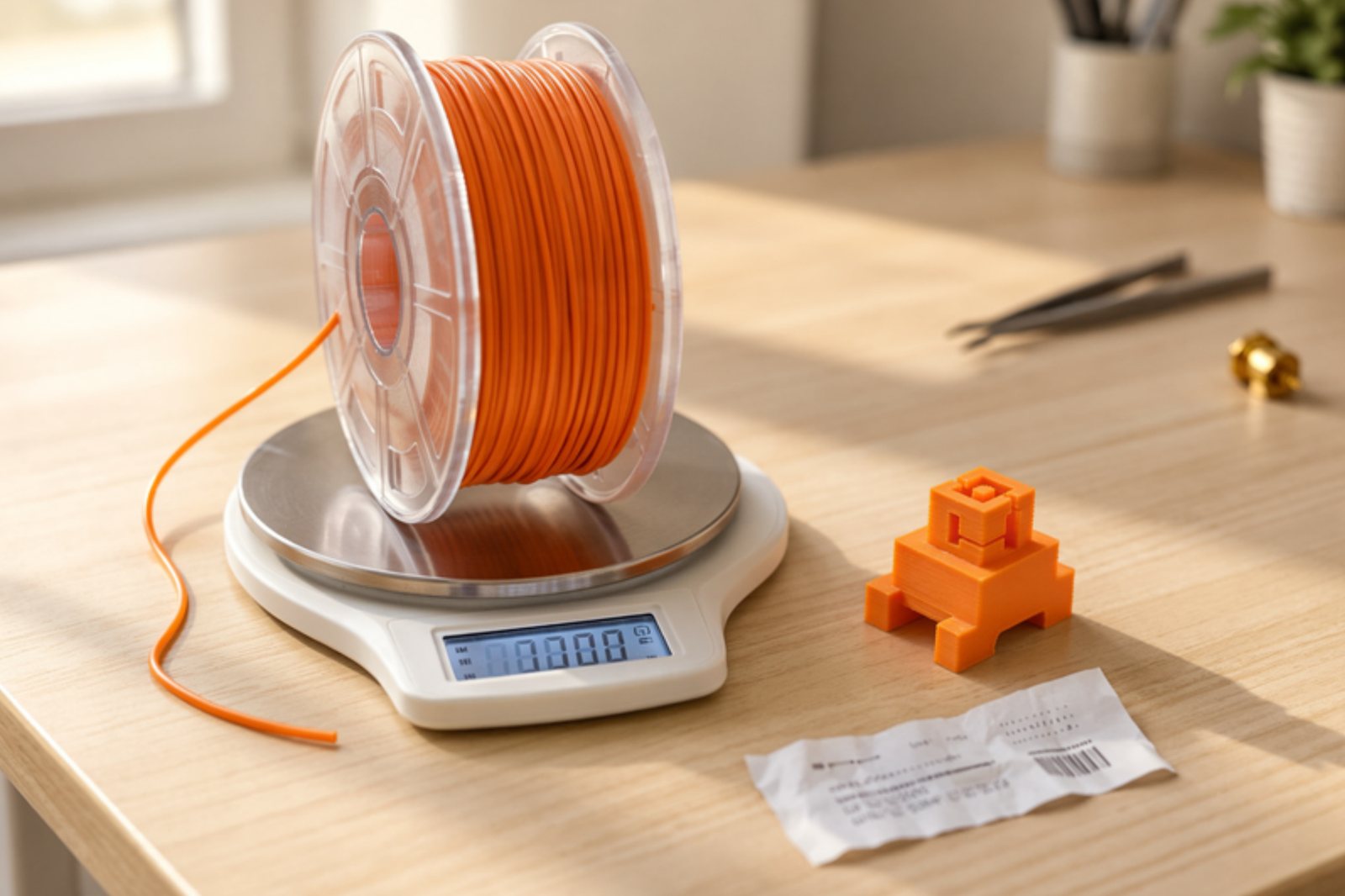
Everything starts with the price of a gram. Take what you paid for the spool and divide it by the weight of filament on it.
Now open your slicer. Every slicer shows the weight of filament a job will use, including supports, brims and the skirt. Multiply that weight by your price per gram.
| Filament used | Spool price | Filament cost | |
|---|---|---|---|
| Phone stand | 42 g | $20 / kg | $0.84 |
| Portrait lithophane frame | 78 g | $20 / kg | $1.56 |
| Desk organizer | 253 g | $24.99 / kg | $6.32 |
| Full-size helmet | 900 g | $24.99 / kg | $22.49 |
For most hobby prints, that is nearly the whole cost. The rest is small, but it is worth knowing where it hides.
The costs people forget
1. Failed prints
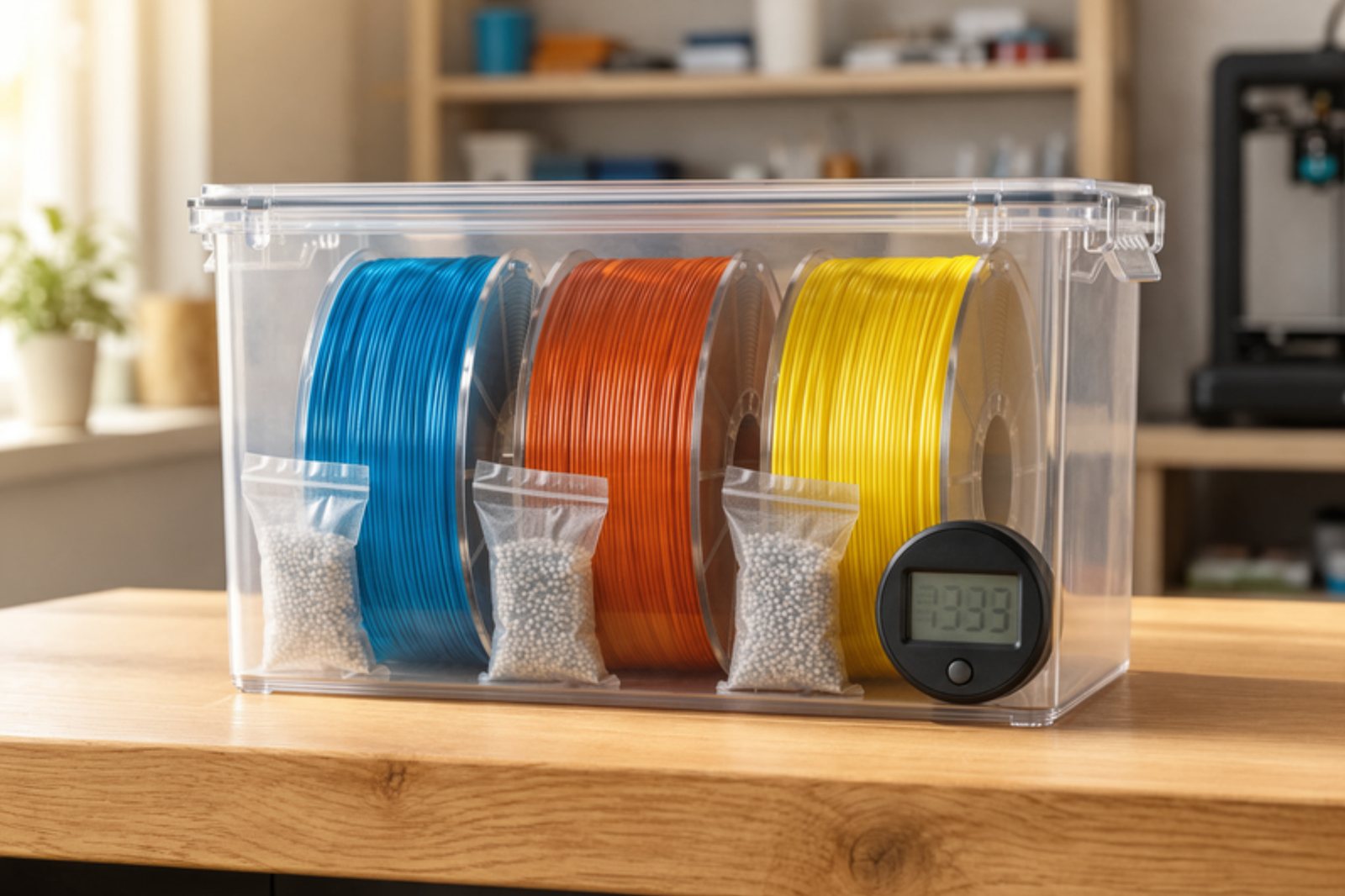
A print that fails at hour nine still used nine hours of plastic. If one print in ten fails, your real cost per good print is about 11% higher than the slicer says. The fix is not complicated: write down every failure for a month. Most people find one or two causes, usually first-layer adhesion or wet filament, behind almost all of them.
2. Supports and purge waste
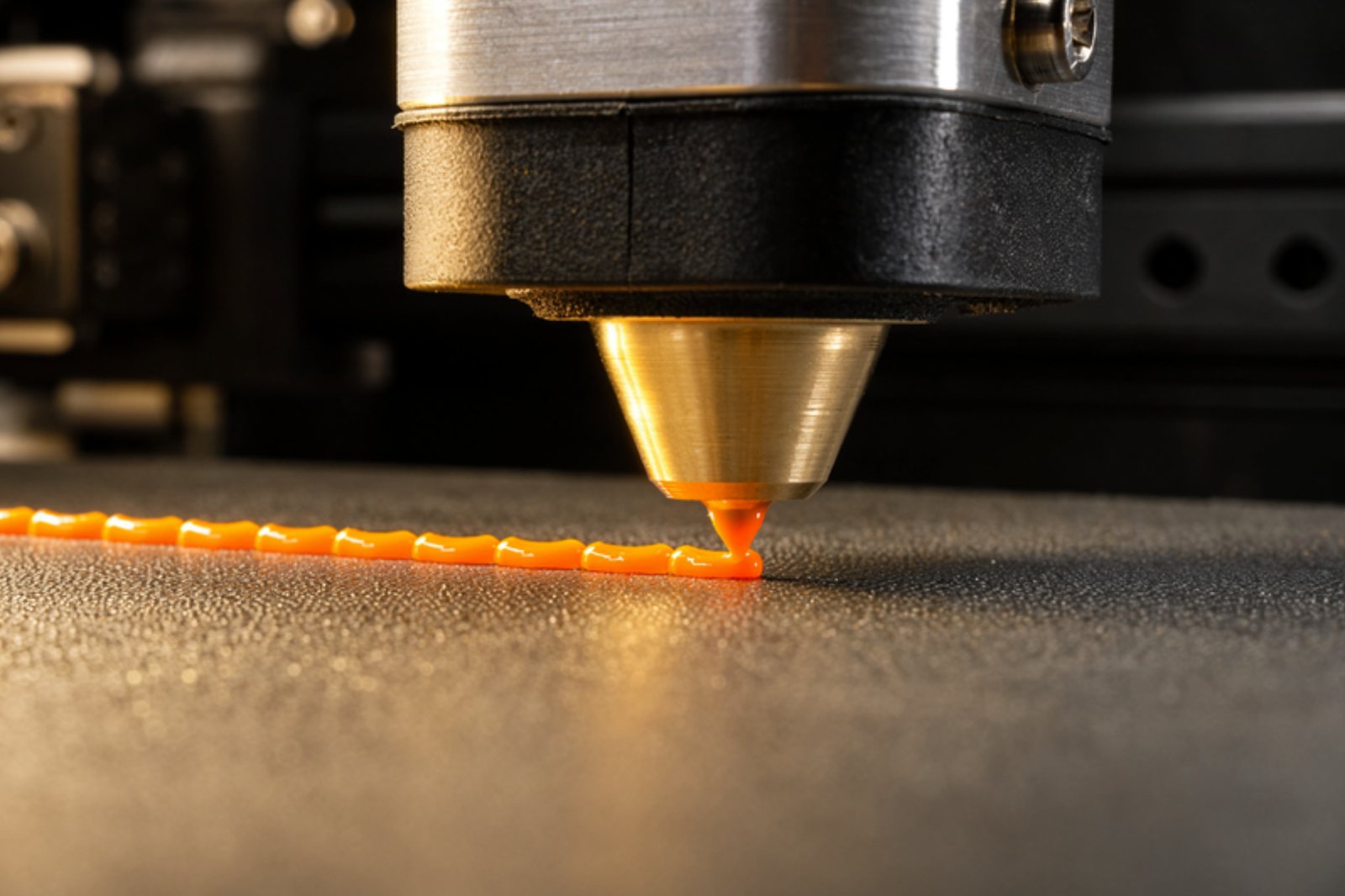
Supports are in the slicer estimate, so they are already counted. Multi-colour prints are different: every colour change purges filament, and on a print with many changes the purge tower can weigh more than the model. Check the slicer's total, not the model's weight.
3. Electricity
A heated bed draws a lot when warming up, then much less once it is at temperature. Averaged over a print, a typical desktop machine uses somewhere around 100 to 150 watts.
4. Wear parts
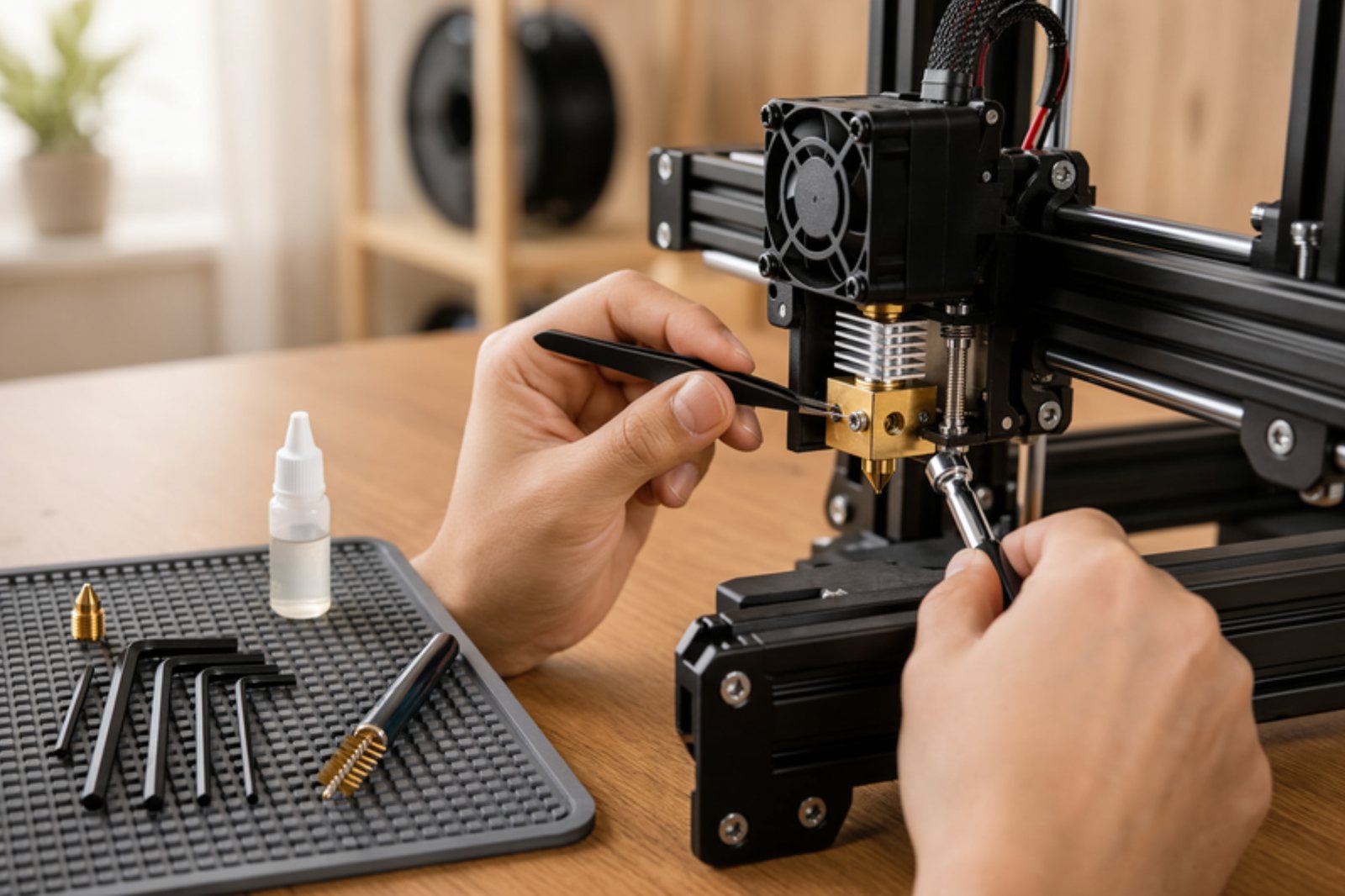
Nozzles, build plates and belts wear out, but slowly. A brass nozzle costs a few dollars and lasts hundreds of hours with plain PLA. Spread over those hours it adds a cent or two per print. Abrasive filaments such as carbon-fibre or glow-in-the-dark are the exception; they can finish a brass nozzle in a spool or two.
The plastic is the cheap part. Your time, and the prints that did not work, are where the money goes.
Pricing a print for someone else
If you sell prints, filament is only the first line. A simple, defensible price has four parts:
- Filament at your real price per gram, plus a little for failures.
- Machine time. Pick an hourly rate that pays the printer off and covers power and wear. Many small farms use $0.50 to $2 per hour.
- Your time. Slicing, removing supports, packing. Even ten minutes matters when you do it fifty times.
- Margin. Whatever is left has to cover the jobs that go wrong.
| Line | Sum | Amount |
|---|---|---|
| Filament | 253 g × $0.025 | $6.32 |
| Machine time | 14 h × $1.00 | $14.00 |
| Handling | 15 min at $20 / h | $5.00 |
| Cost before margin | $25.32 |
Notice how small the filament line is. This is why "three times the filament cost" works for small simple parts and badly under-prices long prints.
Let the app do the adding up
SpoolBoss does the first sum for every print automatically. Enter what you pay per spool once, or forward the receipt and it reads the price for you, and every finished print shows its cost next to its weight. The weekly total on the dashboard is the number worth watching: it tells you what the hobby, or the business, actually costs.
Common questions
How do I calculate the cost of a 3D print?
Divide the spool price by its weight to get a price per gram, then multiply by the grams your slicer reports for the print. A $20 spool of 1 kg is 2 cents per gram, so a 78 g print costs about $1.56 in filament.
How much electricity does a 3D printer use?
A desktop printer usually averages somewhere around 100 to 150 watts while printing. A 10 hour print is roughly 1 to 1.5 kWh, which is typically well under a dollar.
What should I charge for a 3D print?
Add filament, a machine-time rate per hour, your hands-on time, then a margin. Many small sellers land on three to five times the filament cost for simple parts, but work it out from your own numbers.